Mrinal Wadhwa

Mrinal Wadhwa

Previously CTO at Autonomy, Ockam, and Fybr.

Some things I've created:

Recent talks and interviews:


For 21 years, my work was focused on designing distributed systems and products that handle large volumes of data.

Early on, I worked on high-availability and replication for network-attached storage at EMC, where I learned how to make complex distributed systems reliable.

After that, I spent a few years at SAP, focused on large-scale enterprise data, processes, and systems.

Learnings from these early years apply directly to my work now on autonomous AI agents that collaborate across networks and companies to automate tedious business processes.

In 2014, I became CTO of a hardware company that was transitioning into a platform for the Internet of Things. I designed that system and led the deployment of thousands of sensors and controllers embedded in city infrastructure, ports, and more worldwide.

Many of our sensors were machine-learning based and operated in extremely noisy environments, like city streets with power lines, buses, and interference, which taught me how to ship reliable products on top of probabilistic and non-deterministic behavior, a challenge that's acute in all AI products.

Because these systems were embedded in critical infrastructure, like cities and ports, security and trust had to be foundational, not bolted on.

That experience led me to build Ockam, a collection of protocols and an open-source Rust library for cryptographic identities, trust, and end-to-end encrypted communication in distributed systems.

These experiences shaped Autonomy, where I built the infrastructure for thousands of autonomous agents to work together securely.

Recent articles:

Software defense factories

Software defense factories

October 22, 2026

Continuously running software defense factories can assess vulnerabilities, build proof-of-concept exploits, and prepare tested, reviewed fixes.

Self-improvement: how software factories learn

Self-improvement: how software factories learn

October 20, 2026

How writer, reviewer, and learner agents use a shared expertise index to help a software factory learn to maintain its product’s codebase.

3000 pull requests / month

3000 pull requests / month

October 12, 2026

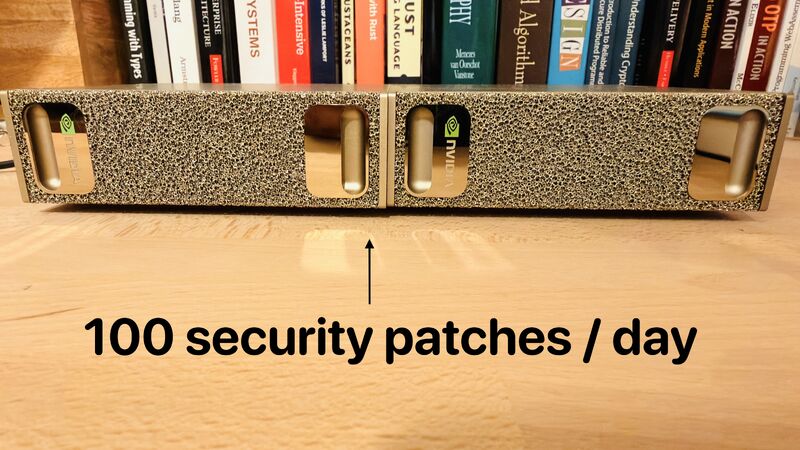
Two Nvidia DGX Spark machines run eight concurrent slices of coding work, creating capacity for approximately 3,000 pull requests a month.

How software factories do security review

How software factories do security review

September 15, 2026

Fluent’s security reviewers spawn prover agents to test suspected vulnerabilities, turning review findings into reproducible evidence and regression tests.

The model landscape completely changed

The model landscape completely changed

August 30, 2026

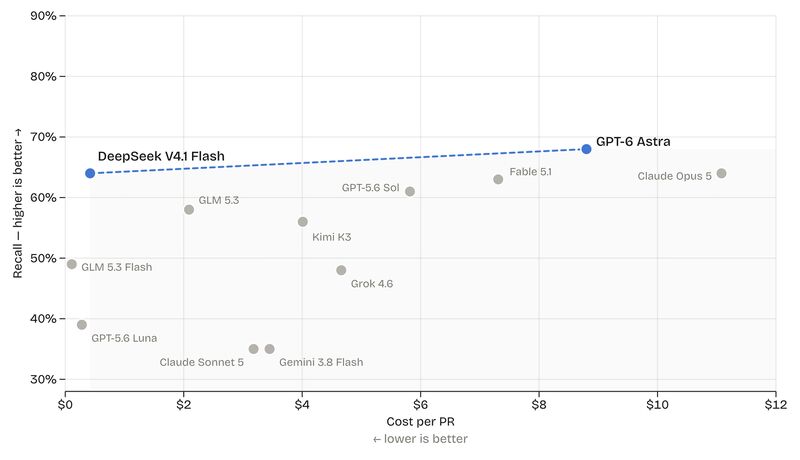
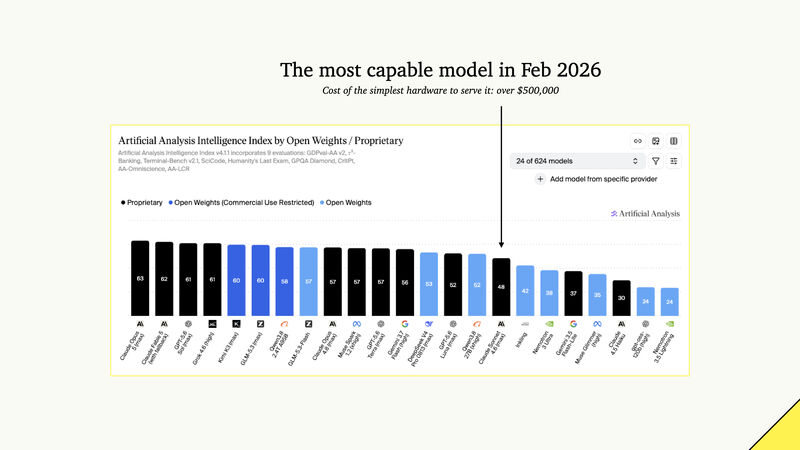
Open-weight models have sharply reduced the cost of owning capable intelligence, making large numbers of parallel agents practical.

Cost of intelligence is falling sharply

Cost of intelligence is falling sharply

August 26, 2026

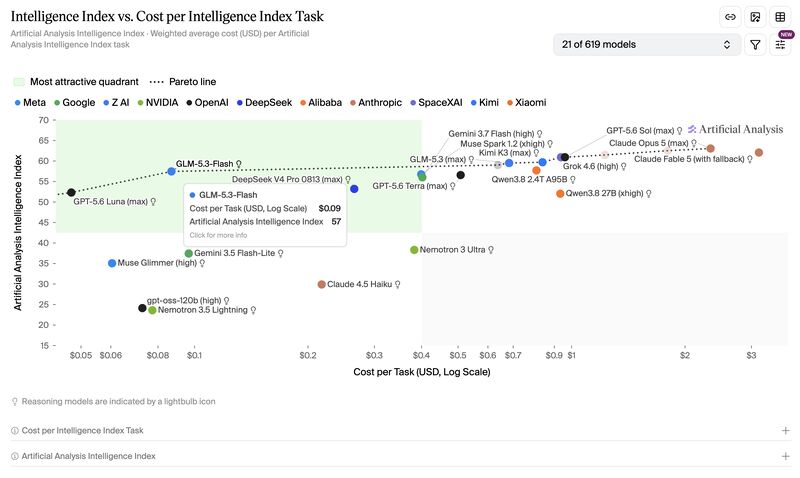
GLM-5.3-Flash brings capable open-weight intelligence to software factories at a fraction of the cost of proprietary models.

The flywheels of a software factory

The flywheels of a software factory

August 9, 2026

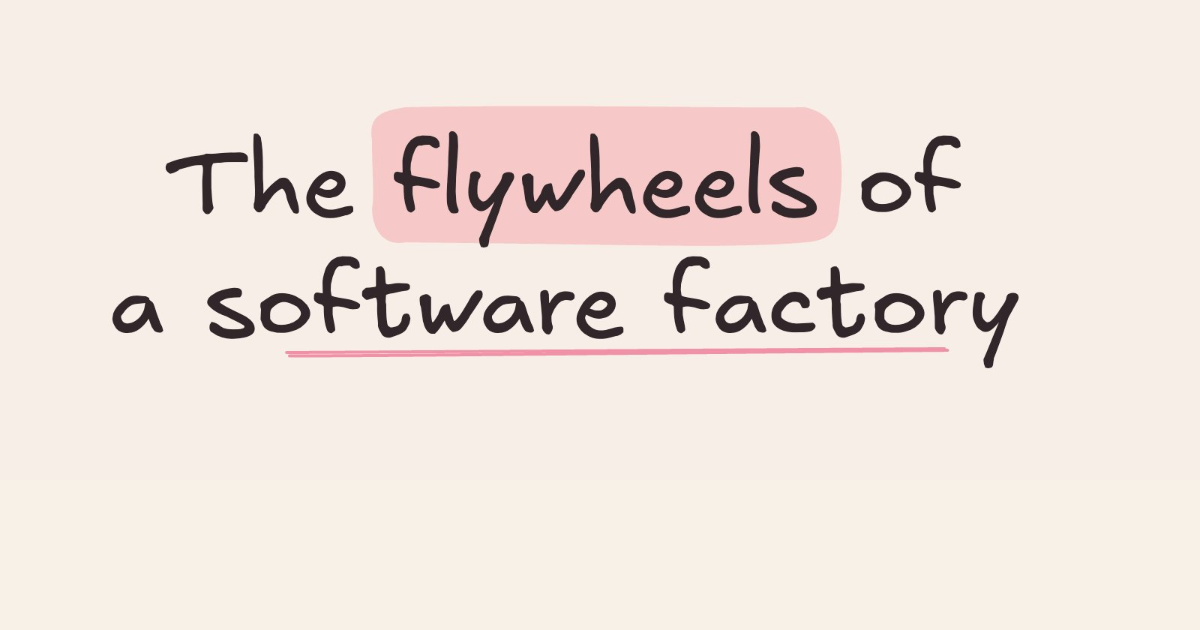
A software factory begins by separating work that needs human attention from work agents can carry out autonomously. But orchestration alone only increases throughput. The deeper advantage comes from reinforcing loops that use product behavior, failures, agent traces, and engineering review to improve both the product and the factory.

The Fluent software factory workflow

How I built a self-improving software factory

July 27, 2026

Fluent is an open-source factory that autonomously turns your team's vision, ideas, bug reports, user feedback, production logs, and agent traces into working software.

Agent Sandboxes

Agent Sandboxes, how to create millions of them

February 21, 2026

Long-horizon agents need their own workspace: a filesystem and a shell. A journey through linux isolation primitives and how we create millions of sandboxed workspaces in milliseconds.

61 reactions, 32 comments, 9 reposts on LinkedIn

Agent Identities

Agent Identities, everything you need to know

February 8, 2026

Agents have raised the stakes: they take autonomous actions. Without cryptographic identity, we can't authenticate requests, authorize actions, or attribute decisions.

109 reactions, 49 comments, 11 reposts on LinkedIn

Agent Swarms

Agent Swarms, like the one Cursor created

January 25, 2026

Swarms that coordinate thousands of long-horizon agents will soon tackle problems too complex for simple agents. An example of 5,000+ agents in Autonomy conducting a deep code review of Vue.js core.

168 reactions, 55 comments, 14 reposts on LinkedIn

How to make agents that succeed

How to make agents that succeed

January 23, 2026

Controlled iteration is the only way to ship a reliable autonomous product and actually improve it over time.

25 reactions, 6 comments, 6 reposts on LinkedIn